A suitable lampshade should fit the holder securely, leave safe clearance around the bulb and direct light where it is needed. Start with the holder type and physical measurements, then compare material, colour and intended location. Size alone does not confirm compatibility.
Quick lampshade selection checklist
Before buying a replacement shade or planning a new fitting, record these details:
- Holder type: identify the holder and how the shade is retained.
- Opening diameter: measure the shade opening and the holder's retaining section.
- Overall diameter: check whether the shade will fit the available space.
- Shade depth: confirm that the bulb will not project beyond an unsuitable edge.
- Bulb dimensions: leave clearance around the lamp and ventilation path.
- Location: decide whether the fitting is indoors, sheltered outdoors or exposed.
- Light direction: choose a shape that supports downward, general or decorative light.
If an existing shade fits correctly, measure it before removal. When there is no reference shade, share photographs and dimensions with the supplier instead of choosing by appearance alone.
How is lampshade size measured?
Lampshade size normally refers to the widest diameter, but buyers should also check the mounting opening and depth. An 8-inch and a 10-inch shade can use similar-looking fittings while producing different coverage and visual proportions.
| Measurement | Why it matters |
|---|---|
| Top or mounting opening | Determines whether the shade can sit on the holder or retaining ring |
| Maximum diameter | Affects coverage, appearance and clearance from nearby surfaces |
| Vertical depth | Influences bulb coverage and the direction of visible light |
| Holder position | Determines how high or low the bulb sits inside the shade |
Do not assume that every shade described as 8 inch, 10 inch or 12 inch has the same mounting opening. Confirm the product drawing or measurement whenever fit is critical.
Plastic vs aluminium lampshades
Plastic and aluminium shades can both be useful, but they suit different priorities.
| Factor | Plastic lampshade | Aluminium lampshade |
|---|---|---|
| Weight | Usually light and easy to handle | Light but more rigid depending on gauge and shape |
| Colour | Available in moulded or coloured finishes | Commonly metallic or painted |
| Typical use | Decorative points, pathways and compatible post fittings | Post lights, compounds, pathways and downward light control |
| Care | Clean with a soft damp cloth; avoid harsh solvents | Wipe gently and inspect painted or finished surfaces for damage |
| Selection priority | Holder fit, heat clearance and colour | Holder fit, edge condition, finish and mounting stability |
Material does not replace an electrical safety check. The bulb wattage, lamp temperature, ventilation and holder condition must remain suitable for the complete fitting. LED brightness should be compared in lumens rather than watts alone; the U.S. Department of Energy lighting guide explains that watts measure input power while lumens measure visible light output.
Check bulb-holder compatibility
Many decorative bulb shades are used with compatible screw-type holders, but the shade must match the holder's mechanical mounting arrangement. An E27 label describes the lamp cap system; it does not automatically guarantee that every shade opening or retaining ring will fit every E27 holder.
Check that:
- the holder is not cracked, loose or heat damaged;
- the shade does not rest directly on the bulb;
- the retaining ring or fastener engages properly;
- wiring is not pinched by the shade or mounting hardware;
- the fitting remains stable after installation.
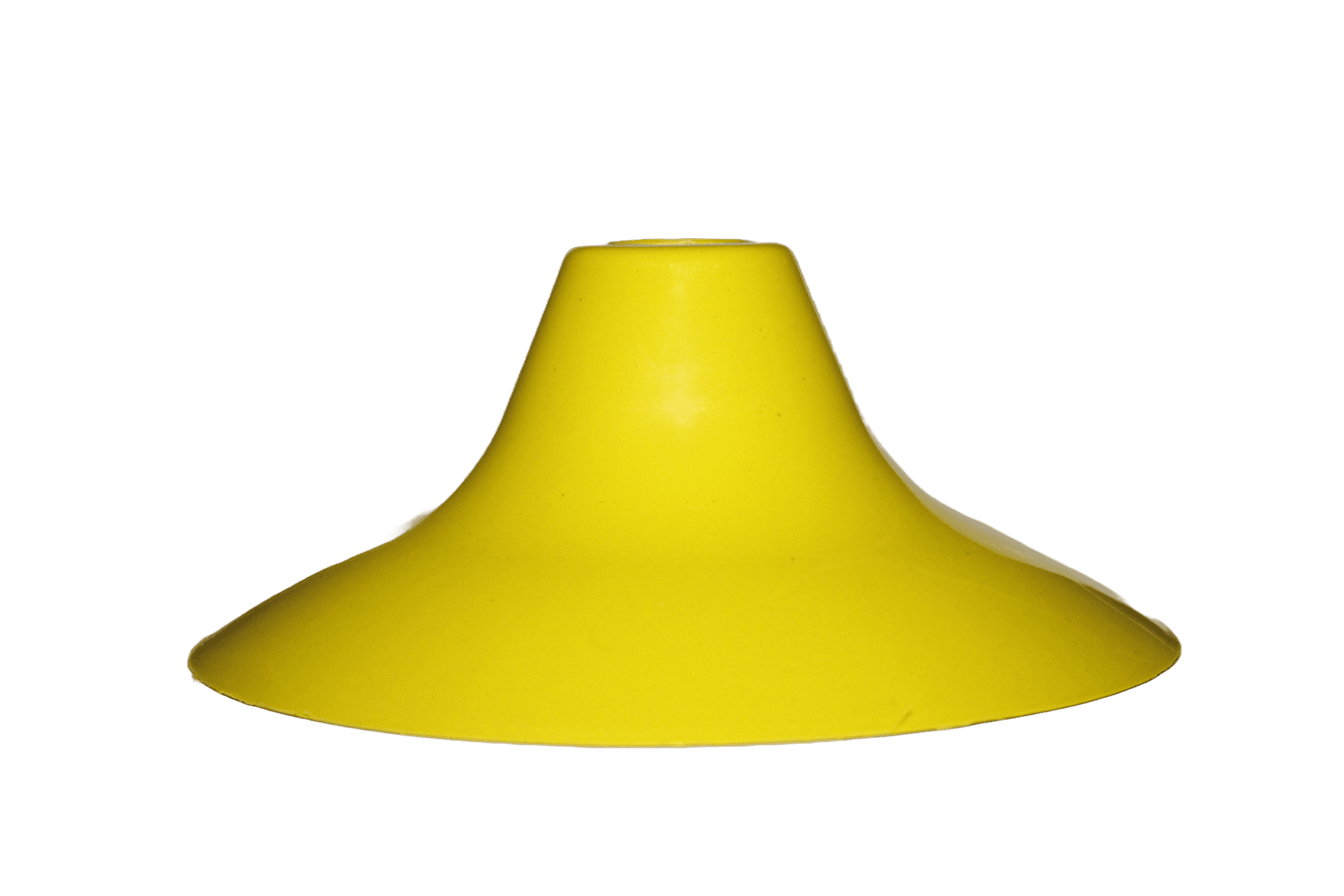
Browse Lumni's bulb holder, yellow bulb shade, green bulb shade and aluminium lampshades to compare the available formats.
Which shade works for outdoor post lighting?
For a post, compound or pathway fitting, prioritise downward light control, mechanical stability and suitability for the actual exposure. A shade can help cover the bulb and reduce direct side glare, but it does not by itself make the electrical fitting waterproof. The holder, wiring enclosure, seals and mounting method must all be appropriate for the location.
Use a sheltered product only in a sheltered position. For exposed installations, ask for the complete fitting's environmental rating and installation instructions rather than relying on the shade material alone.
Installation and maintenance
Switch off and isolate the circuit before touching a holder or fitting. Allow the bulb to cool, support the shade while loosening its retainer and do not pull on the wires. After fitting, verify that the shade is level, secure and clear of the bulb.
Clean dust periodically because dirt changes appearance and can reduce useful light. Replace a shade if it is cracked, badly distorted, corroded at a fixing point or no longer held securely. Electrical repairs should be completed by a qualified electrician.
Final answer
Choose a lampshade by matching the holder and mounting opening first, then confirm overall diameter, depth, bulb clearance, material and location. Plastic is useful when low weight and colour are priorities; aluminium is useful when a rigid metallic shade and downward light control suit the fitting. For an exact recommendation, send the existing shade measurements, holder photograph, bulb type, quantity and delivery location through the Lumni Power Tech contact page.